

What is it like to engage in talks with Russian representatives regarding the war in the region?
This inquiry has generated widespread interest in the wake of several recent rounds of peace discussions, which until now appeared to produce minimal progress half a decade after Russia's full-scale invasion.
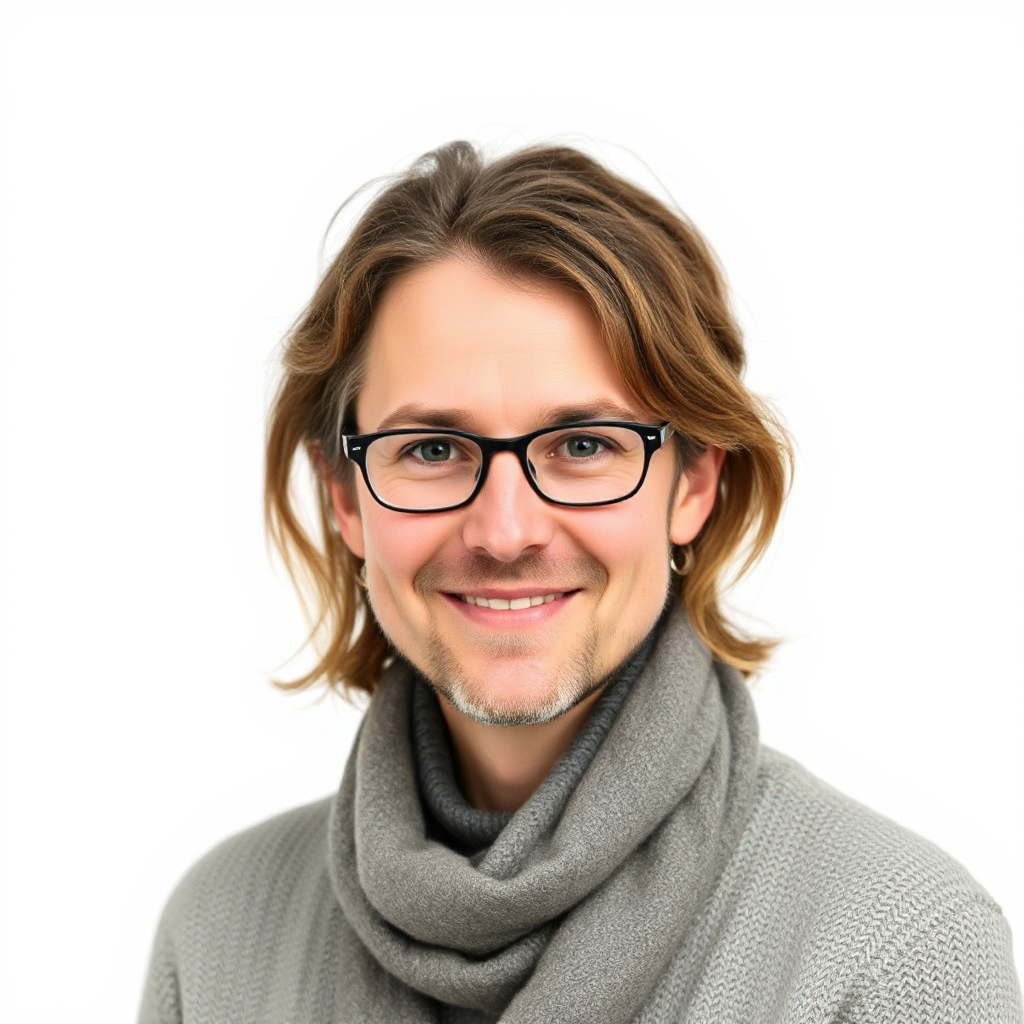
A further round of US-mediated negotiations is likely to take place in the Swiss city in the coming days. In preparation, an important member of Ukrainian President Zelensky's delegation, the diplomat, who has been involved in the latest military-to-military discussions, has provided his perspective.
As stated by Kyslytsya, these dealings are professional and mostly free of the sort of ideological and rhetorical posturing seen in other forums by Russian leadership.
"Military officials possess a better grasp of the realities in the battlefield," he remarked during a meeting earlier this week.
"It's another thing if they [the Russians] are able, or not, of reporting [back] accurately…without altering or changing the facts," he continued.
It is not an easy task to attempt to end a war. The nature of the front line in the Donbas region - where tens of thousands of unmanned aerial vehicles operate and kill over a huge so-called "contested area" between the two sides, while two hundred thousand Ukrainian residents still live in the "heavily fortified" urban areas of the Donbas - renders the practical business of disengagement extremely complicated.
"You have to have a precise set of rules and procedures," Kyslytsya said, "and a way to verify and monitor."
The Role of International Mediators
A great deal of these preparations, he noted, is finished, thanks in part to the close participation of US officials, such as General Alexus Grynkewich and Dan Driscoll.
Clearly against Kyiv's interest to criticise envoys of the current US government, but when he compliments the US delegation for its efforts, he comes across as genuine.
"We must credit the US side for their commitment and their perseverance," he says, "since they sit in the meetings non-stop. They not only observe…they put questions and they heed our responses."
The negotiator was similarly positive about the contributions of the former president's adviser, whom he described as "not a novice", and wealthy envoy Steve Witkoff, whom he described as "far more astute individual than the simplified image often presented in the media".
The US, he asserted, will undertake a key role in overseeing any potential truce, with resources including orbital and other forms of high-tech surveillance.
"It is necessary to have an entity who will serve as an arbitrator, because if there is a breach there should be a third party that is reliable [and] authoritative."

Past and Current Monitoring Realities
During an eight-year period before the full-scale offensive in recent years, this monitoring role was handled by the OSCE - a body whose limited means and lack of punitive powers rendered it mostly incapable of preventing an escalation.
"It was no small feat [for them] just to have a couple of drones flying over the area," he commented. "It's kind of the stone age era compared to what we have today."
By contrast, latest analyses indicate that up to 12,000 drones are operating above the single city of Pokrovsk at any given moment.
A Personal Account on Facing the Adversary
When asked about his ability to sit across the table from delegates representing a head of state in the Russian government who has shown readiness to expend over a million-plus of his country's soldiers to conquer Ukraine, Kyslytsya, also a former UN ambassador, offered his response.
He told that he'd had a long time of experience.
"I saw much worse. I served five years in at the UN, a portion prior to the major war. I regularly had to be present with the enemy on a regular basis."
A particular night is etched in his recollection: the eve of the invasion.
In the middle of an urgent UN Security Council meeting, convened to address the urgent crisis in the country, the ambassador got word that his homeland was under attack.
At the same time, far away to the eastward in the capital, initial far-off detonations were heard as Russia's total assault on the nation commenced.
During scenes of intense drama, the ambassador tried to persuade his Russian counterpart, Vassily Nebenzia, to contact his boss, Foreign Minister Sergei Lavrov, to seek guarantees that Russian troops would not invade.
"I've already said everything that I am aware of now," the Russian diplomat responded, according to Kyslytsya. "I'm not going to wake the minister at this hour."
The world changed at that moment. The diplomat remained at the UN for an additional period prior to returning to Kyiv.
The Road Forward
Should the delegations reconvene in Switzerland on Thursday, he'll be there, still working through the details and logistics of a ceasefire but anticipating continuously for the crucial element of the jigsaw to be resolved.
"Hostilities might be stopped by simply one call of one person to his military chief of staff," he stated.
"But apparently, the Kremlin dictator [Vladimir Putin] is not up to stopping the conflict at present."


